You can only combine square-root terms when they share the same radicand, but simplifying first reveals terms you can add. This illustrated guide covers 3 methods and 16 steps, with a separate picture for every step.
This guide walks through the process in clear illustrated steps, from the first preparation to a finished result. Each step has its own picture, so you can compare your progress as you go.
How to use this guide
Work through the steps in order. Method 1 of 3: Simplify Each Radical covers the basics, and the later methods offer alternatives and finishing touches. If you only have a minute, skim the Quick steps box above and come back for the details.
Related guides
- How to Simplify Radicals
- How to Add Fractions with Whole Numbers
- How to Study for a Math Test
- How to Take Better Notes in Class
- Browse all Education guides
- All 52runoob guides
Trusted external resources
- Khan Academy — radicals and exponents
- Purplemath — simplifying radicals
- Wolfram MathWorld — square root
A note on sources
We check each guide against the official resources listed in References at the end of this article. External links open in a new tab; the related guides above stay on this site.
Quick steps
- Simplify each radical first
- Only add terms with the same number under the root
- Add the coefficients and keep the radical
Things you'll need
- Paper and a pencil
- A multiplication table or calculator
- A quiet place to work
- An eraser for corrections
Step-by-step
Method 1 of 3: Simplify Each Radical :: Pull out perfect-square factors.
Step 1: Write down the expression
Copy the problem neatly so you can work through it step by step.

Step 2: Look for perfect-square factors
Find factors such as 4, 9, or 16 inside each radicand.

Step 3: Split the radical
Rewrite √12 as √4 times √3 to separate the perfect square.

Step 4: Take the square root out
Since √4 is 2, write √12 as 2√3.

Step 5: Simplify every term
Repeat the process for each radical in the expression.
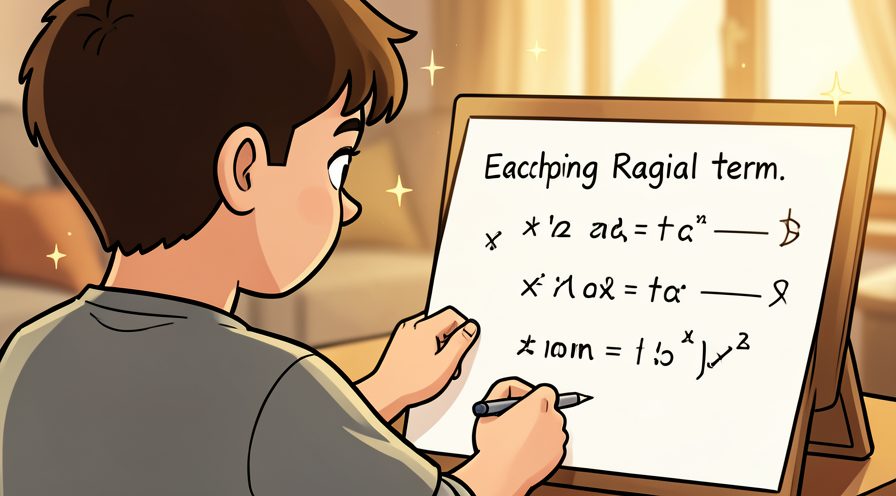
Method 2 of 3: Combine Like Terms :: Add only matching radicals.
Step 6: Identify the radicands
Underline the number inside each root to spot matching terms.

Step 7: Group the like radicals
Put terms with the same radicand together.

Step 8: Add the coefficients
Add the numbers in front and keep the radical unchanged.

Step 9: Keep unlike terms separate
Leave terms with different radicands as they are.

Step 10: Write the final expression
Combine your results into one clean answer.

Method 3 of 3: Check and Practise :: Make the method stick.
Step 11: Estimate to check
Approximate each root to see if your answer is reasonable.

Step 12: Substitute a value
Square-check by plugging a number into a simple example.

Step 13: Practise with pairs
Work through several like-term additions until the pattern feels natural.

Step 14: Show your steps
Write each simplification so you can find mistakes later.

Step 15: Check a worked example
Compare your answer with a trusted textbook example to confirm the method.

Tips
- Treat the radical like a variable: 2√3 + 5√3 is like 2x + 5x.
- Look for perfect-square factors such as 4, 9, and 16 inside the root.
- See How to Simplify Radicals for extra practice.
Warnings
- Do not add the numbers inside the roots directly; √2 + √3 is not √5.
- Check that terms are truly alike before combining them.
Frequently asked questions
Can I add square roots with different numbers inside? Not directly; simplify first, then combine only matching radicals.
What is a coefficient? It is the number in front of the radical, such as the 3 in 3√2.
Why simplify first? Simplifying can turn unlike radicals into like terms you can add.
References
- Khan Academy — radicals and exponents. https://www.khanacademy.org/
- Purplemath — simplifying radicals. https://www.purplemath.com/
- Wolfram MathWorld — square root. https://mathworld.wolfram.com/
- wikiHow — How to Add Square Roots. https://www.wikihow.com/add-square-roots
Every guide is reviewed against its sources. See our editorial policy.



Reader comments
0 so farFinished this guide? Tell other readers what worked, what didn't, and what you would change.